A Morocco road trip works best when the driving plan includes the places where you will stop. A motorway journey, an approach to a Marrakech riad and a mountain crossing ask different things of the driver. Vrenty Car brings those decisions together here: documents, road habits, payment, parking and what to do when the original plan no longer fits. These are planning notes, not a substitute for road signs, current official advice or the conditions of your particular rental agreement.
Prepare the driver as carefully as the itinerary
Start with the licence you actually hold, its issuing country and the documents required for your visit. Official UK travel advice currently tells UK licence holders to carry a 1968 International Driving Permit alongside their UK licence in Morocco. That is a statement about UK licence holders, not a rule we extend to every visitor. Check the appropriate official advice for your own documents, then separately check the supplier's age, experience and licence requirements before reserving.
An accepted online reservation does not remove the need to present the required originals at collection. Keep the booking confirmation and supplier contact details available offline, alongside the information needed to identify the car. Add any second driver to the agreement before sharing the driving. The Morocco car rental overview helps connect these checks with the car search; a route should not depend on someone driving who has not been accepted under the contract.
Settle into right-hand traffic before a long journey
Morocco uses right-hand traffic. NARSA's motorway guidance tells drivers to keep right, overtake on the left, indicate lane changes and respect posted limits. Treat those principles as the starting point, then respond to the actual signs, markings and instructions around you. Do not assume that another driver's manoeuvre establishes a right of way. Approach unfamiliar junctions slowly enough to read them and leave yourself an alternative to an abrupt lane change.
Before moving, adjust the mirrors and seat, find the indicators and demister, and test the navigation sound while parked. For a visitor accustomed to driving on the left, the first exit from a car park deserves particular concentration. Ask passengers to keep directions brief until the driver is comfortable. A wrong turn is recoverable; reversing into traffic or cutting across lanes to preserve a navigation instruction is not a sensible recovery method.
Use a simple first driving day
An overnight flight followed by collection paperwork is not the ideal prelude to a demanding sightseeing circuit. Consider ending the first drive at accommodation with a clear vehicle entrance and confirmed parking. If the first nights are inside a medina, compare collecting later with keeping a car parked throughout the stay. The apparently convenient choice of collecting immediately can add a search for parking when everyone is tired and carrying luggage.
Put a proper break into a long transfer and leave space for buying water, finding fuel and checking the next stage. A map's arrival estimate is useful for orientation, not a promise. Traffic leaving Casablanca, a missed hotel entrance or slow vehicles on an ordinary road can change it. If the day is slipping, shorten the sightseeing rather than making up time through faster driving. A rested arrival is a worthwhile part of the itinerary.
Separate motorway driving from ordinary roads
On a motorway, choose your lane early, keep a generous following distance and leave the emergency lane clear. NARSA advises increasing the gap in poor weather and keeping safety equipment accessible. Ask the supplier to show you the warning triangle and safety vest before departure. A phone mount does not make operating a screen harmless: enter the destination before setting off and stop somewhere suitable to change the route.
Ordinary roads can require more frequent decisions about junctions, roadside activity and changes in speed. Avoid treating a quiet-looking stretch as permission to relax attention. When someone behind wants to pass, remain predictable rather than speeding up. Choose a legal, safe stopping place if you need a rest or wish to let pressure from following traffic dissipate. Never pull onto a soft verge simply because the view is attractive or the navigation needs checking.
Prepare for tolls without assuming one payment method
Morocco's motorway operator ADM lists several payment methods, including cash, bank cards and Jawaz. It is therefore misleading to describe the whole network as cash only. Equally, a general list does not guarantee that every foreign card will work in every circumstance. Read lane signs, have a practical backup and keep payment within reach before reaching the barrier. Do not change lanes suddenly after committing to an approach.
If the rental car contains a Jawaz device, ask whether it is active for your booking, how its balance or charges are handled and whether the supplier adds a service fee. Hardware in the windscreen does not prove that passage is included in the rental price. Retain toll evidence when possible, especially if you expect an end-of-rental reconciliation. Discuss a failed payment with the operator through the available assistance process instead of improvising around a barrier.
Treat medina access as a separate final leg
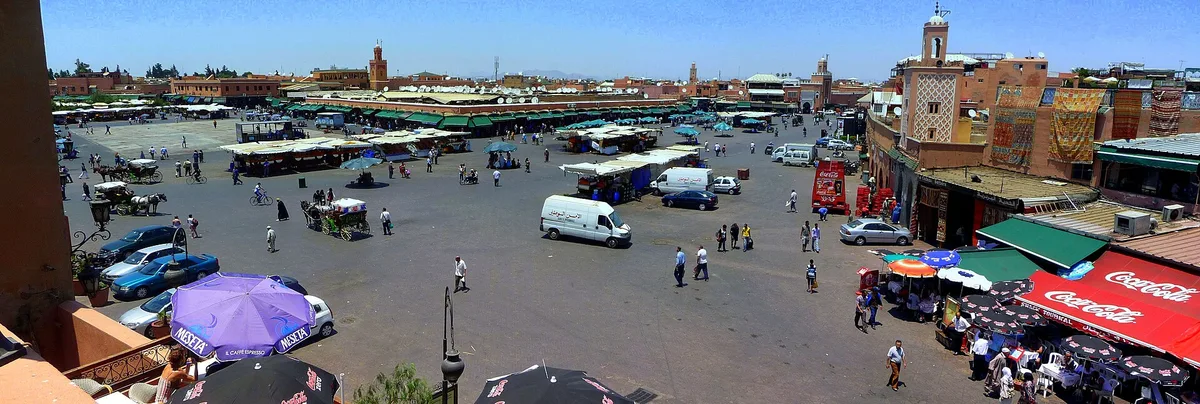
An accommodation pin can identify a building without identifying a lawful car approach. Ask a Marrakech or Essaouira host for the exact parking location, the approach road and the walking route to the door. Explain whether you have large cases, a pushchair or someone who finds uneven walking difficult. A convenient parking plan for a light traveller may be unsuitable for a family arriving with several bags after dark.
Do not follow a navigation shortcut through an alley that looks unsuitable or past a restriction sign. Stop in a lawful place and clarify the route. If the host offers help with luggage, establish the meeting point and any charge in advance. The purpose is to separate the car journey from the pedestrian journey, not to force the car as close as possible to the room. Leave time for that change of transport in your arrival plan.
Read the parking arrangement before leaving the vehicle
A space being occupied by other cars is not proof that parking is permitted there. Look for signs, markings, access restrictions and any stated payment procedure. For a managed facility, confirm the charge, charging period, closing arrangements and whether you retain the keys. If someone requests payment and their role is unclear, ask calmly for the facility's terms or choose an alternative rather than assuming a particular nationwide informal parking rule.
Check whether your hotel price includes a space, merely offers access to a paid facility, or only describes nearby parking. Reserve when the hotel requires it. Keep the location saved separately from the hotel's address and photograph useful entrance details for the return walk. Avoid blocking doors, crossings or working access even briefly. Paying a person nearby does not override a restriction, and a rental supplier can still pass on properly attributable parking charges under its agreement.
Plan luggage and passenger comfort at stops
Organise bags before arriving at a busy sightseeing stop so you do not need to display their contents beside the car. Take passports, payment cards and other essentials with you. Choose parking for its legitimate access and practical surroundings, not merely its distance from a viewpoint. Close windows, lock the vehicle and check that nobody has left a phone or bag on a seat. Do not describe any parking area as theft-proof.
For children, reserve a suitable restraint and confirm its availability, fit and installation arrangements with the supplier. Choose a vehicle that holds both the passengers and their luggage without obstructing visibility. Keep water and necessary travel items accessible, but secure loose objects. A stop is also an opportunity for the driver to reset attention. A car that feels manageable when empty can behave differently once fully loaded for a multi-city journey.
Give weather and darkness real influence over the route
Official travel advice warns about poor lighting and hazards on some roads after dark, and about difficult conditions in mountain areas. Check weather and road information shortly before travel, not just when booking weeks earlier. Heavy rain can affect routes beyond the place where it is falling. Never enter floodwater because another vehicle has just done so. A navigation app cannot assess the depth, road surface or safety of a crossing for you.
For a High Atlas journey, build in a genuine option to postpone or stay overnight. Our Marrakech to Ait Benhaddou planning guide explains why the mountain crossing should shape the day. A coastal trip has a different rhythm; the Essaouira driving guide focuses on arrival, parking and the return journey. Neither itinerary should be treated as a guarantee that a road is currently open or suitable.
Keep the rental permission boundary clear
The current Localrent Morocco terms restrict use to paved public roads and prohibit international border crossings. An SUV badge does not grant permission to use tracks, beaches, dunes or riverbeds. Nor does a guide's suggestion of a scenic alternative alter your agreement. If a hotel's final access appears unpaved, resolve that issue with the supplier and host before choosing the property or driving beyond the permitted road.
Read the deposit and insurance guide before assuming damage on an excluded surface will be covered. Protection, roadside assistance and permission to drive somewhere are separate questions. Take a screenshot or retain the written answer for an unusual itinerary, but do not seek an informal exception to an explicit prohibition. A safer solution may be parking at an agreed accessible point and arranging the remaining journey separately.
Handle an incident through the right people
Put immediate safety first. If anyone is injured or there is danger, contact the appropriate emergency services and follow official instructions. Notify the supplier promptly using the number in your booking documents; ask what reports and evidence the contract requires. Do not continue driving a vehicle with a warning or damage that may make it unsafe. A delayed photograph cannot replace a report required at the time of an incident.
For a breakdown, describe your location using a road name, direction, nearby junction or safe location pin. Tell the supplier whether the vehicle is obstructing traffic and whether passengers need assistance. Do not authorise a repair or towing arrangement without understanding the approval process unless an immediate emergency requires action. Keep messages, invoices and report references together so the later discussion concerns a documented sequence rather than conflicting recollections.
A practical departure check
Run through these items while parked. Discovering an unanswered question at the first toll plaza or at a closed hotel entrance is avoidable.
Save an offline route as a backup, but keep its limits in mind. An offline map may not reflect a new closure, temporary traffic instruction or changed access restriction. Carry a charger and make sure a passenger can retrieve the destination details if the driver's phone fails. When navigation and a sign conflict, follow the lawful instruction on the ground and stop safely to find another route.
- Set the route before moving and keep the booking details offline.
- Inspect fuel and warning lights before committing to a long stage.
- Leave enough daylight and flexibility to stop rather than press on.
| Check | What to establish |
|---|---|
| Driver | Required originals, authorised drivers and a rested start |
| Route | Current conditions, permitted surface and a realistic fallback |
| Payment | Fuel, toll and parking methods plus a usable backup |
| Destination | Vehicle entrance, lawful parking and the final walking leg |
| Assistance | Supplier number, equipment and incident reporting process |
Questions & answers
Is a UK driving licence enough on its own?
Current UK government advice specifies a 1968 International Driving Permit alongside a UK licence for driving in Morocco. Check that guidance before departure and also meet the supplier's document conditions. Requirements for other licence holders should be checked separately.
Are Morocco's motorway tolls cash only?
No. ADM lists cash, bank cards and Jawaz among its payment methods. Prepare a backup and follow the signs for the lane you use. A rental car's toll device needs a separate explanation of activation, charges and any supplier administration fee.
Can I drive directly to a medina riad?
Do not assume so from the accommodation address. Ask the host for the lawful approach and exact parking location, then plan the walk or luggage assistance separately. Restrictions and practical access depend on the property and surrounding streets.
Does renting an SUV allow unpaved sightseeing detours?
No. Vehicle type is not permission. Current Localrent Morocco terms limit use to paved public roads. Choose an itinerary that respects the agreement, and clarify any doubtful accommodation access before making a commitment.